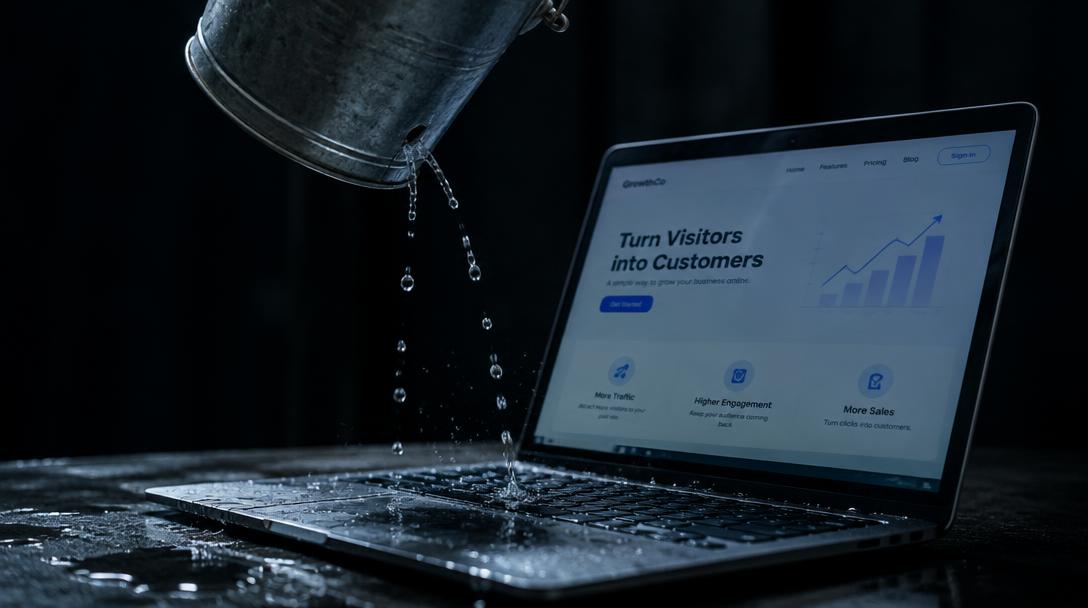
Small improvements in conversion rate compound into significant revenue gains. A website converting at 3% instead of 2% is 50% more effective—without any increase in traffic costs.
Understanding Your Funnel
Before optimizing, understand where visitors drop off. Use analytics to identify high-exit pages and friction points. Heat mapping and session recordings reveal how users actually interact with your site.
Value Proposition Clarity
Visitors should immediately understand what you offer and why it matters. Your headline should communicate the primary benefit clearly. Remove jargon and focus on outcomes customers care about.
Reducing Friction
Every additional step loses customers. Minimize form fields to essentials only. Offer guest checkout for e-commerce. Use autofill and smart defaults. Make the path to conversion as short and simple as possible.
Building Trust
Trust signals overcome purchase hesitation. Display customer reviews and testimonials prominently. Show security badges, especially near forms. Include recognizable client logos and certifications.
Testing Methodology
A/B test one element at a time for clear results. Run tests until reaching statistical significance—typically 100+ conversions per variation. Document all tests and learnings for institutional knowledge.
Mobile Optimization
Mobile users often convert differently than desktop users. Optimize for touch interactions, fast loading, and thumb-friendly navigation. Test mobile experience separately and frequently.
People also search for
- why does my website get traffic but no enquiries
- how do i find where visitors drop off on my landing page
- what should i test first to improve website conversions
- does a shorter contact form generate more leads
- how can i improve landing page conversions without more traffic
Related topics